

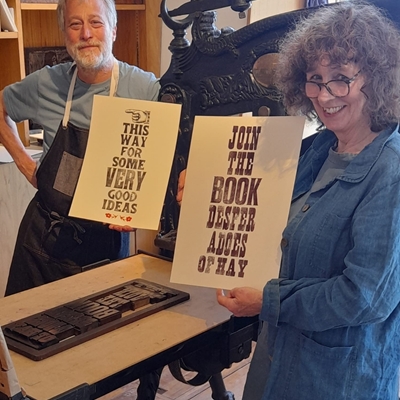
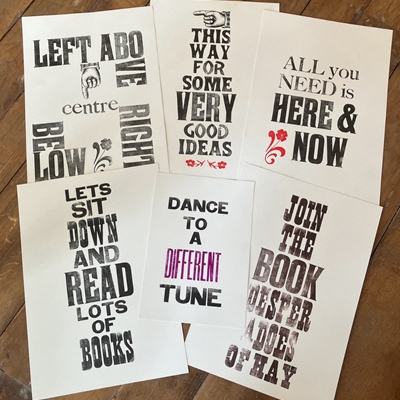
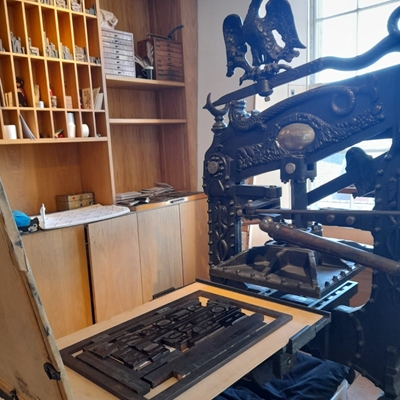
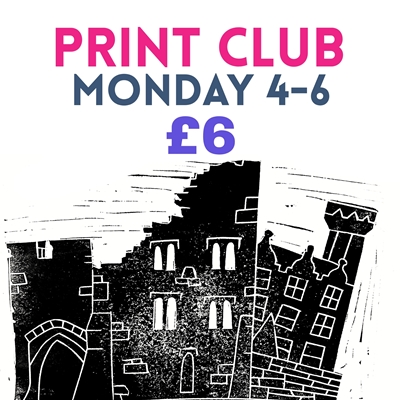
Print Club costs £6 per session - Some materials will be provided and there will be access to the printing press supervised by seasoned members of Print Club.
This club will develop according to the needs and requirements of the members of the group - so why not come along and become a part of Print Club.
Aiden is now off on his travels so the group is self-led - if you have never done lino printing before you are still welcome to come along and joinin - just let one of the group know your level of knowledge and they will help you.
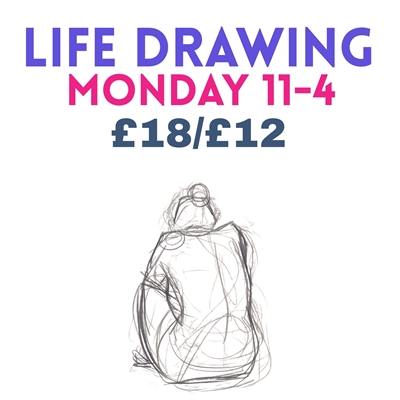
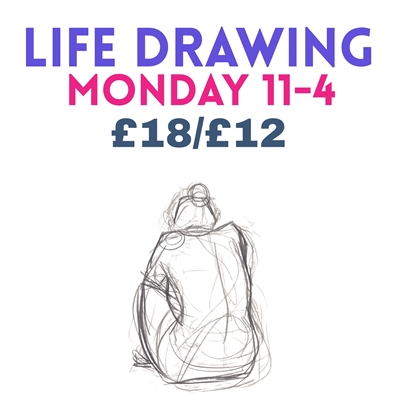
The sessions cost £18 for the full day from 11-4pm and £12 for a morning or afternoon session only.
The morning session starts at 11am so please arrive at about 10.45am
The afternoon session starts at 1:45pm so please arrive at least 10 mins beforehand
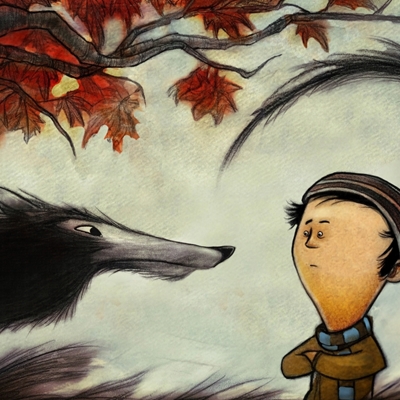
The Solstice Collective Wind Quintet with narrator Felix Ashley and puppeteers Jodie Yates and Eve Wilson will present Prokofiev's iconic and much-loved work for children 'Peter and the Wolf' in a performance enhanced by puppets specially commissioned for this event. In this musical tale, composed by Sergei Prokofiev in 1936, the narrator tells a folk story which the ensemble illustrates by using different instruments to play themes that represent each character in the story.
The Solstice Collective, graduates of the Royal Welsh College of Music and Drama, are Maisy Shaw - flute, Anna Benton - oboe, Molly Bradley - clarinet, Gabriel Adshead - bassoon with Toby Johnson-Jones - French Horn.
Tickets: Children and under 25s - FREE / adults £15.
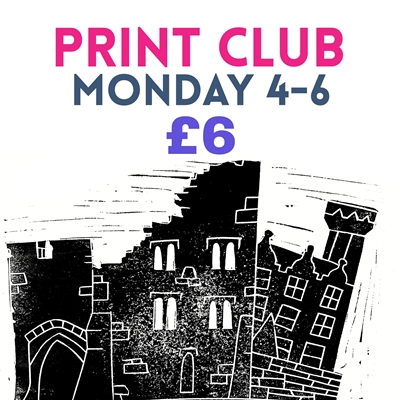
Print Club costs £6 per session - Some materials will be provided and there will be access to the printing press supervised by seasoned members of Print Club.
This club will develop according to the needs and requirements of the members of the group - so why not come along and become a part of Print Club.
Aiden is now off on his travels so the group is self-led - if you have never done lino printing before you are still welcome to come along and joinin - just let one of the group know your level of knowledge and they will help you.
The sessions cost £18 for the full day from 11-4pm and £12 for a morning or afternoon session only.
The morning session starts at 11am so please arrive at about 10.45am
The afternoon session starts at 1:45pm so please arrive at least 10 mins beforehand
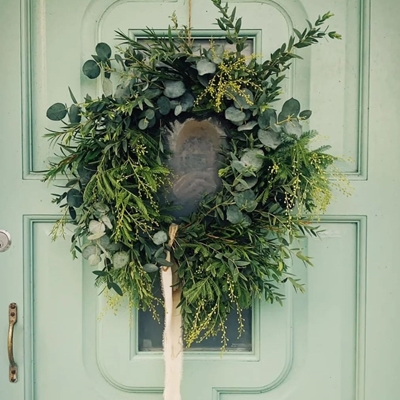
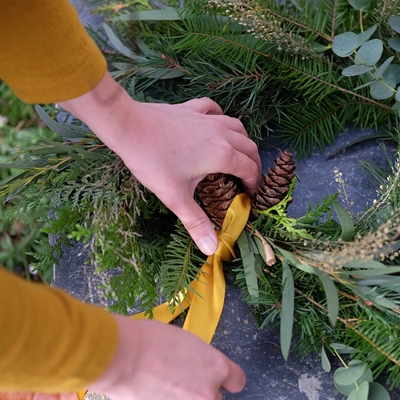
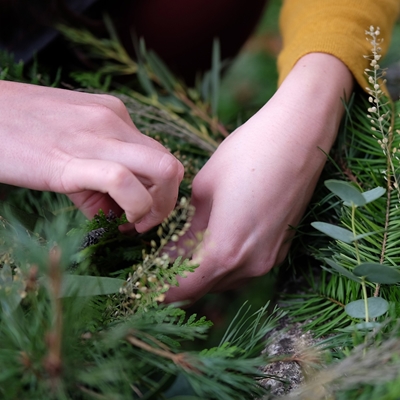
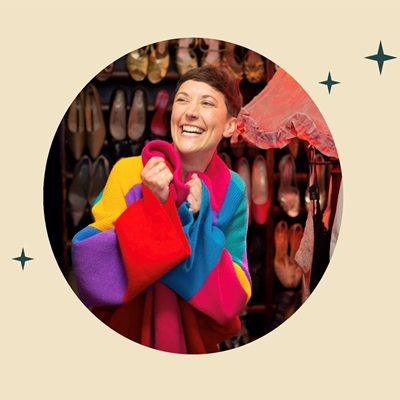
Come and make a beautiful Christmas wreath with local flowers and foliage and enjoy a sneaky glass of mulled wine while you create.
All materials provided but please bring a pair of secateurs if you have them.
The workshop has a maximum participants so book early to avoid missing this lovely festive treat.
You can see more about Lisa on her website
The workshop runs from 6pm to 8.30pm
Price includes all materials and a glass of mulled wine!
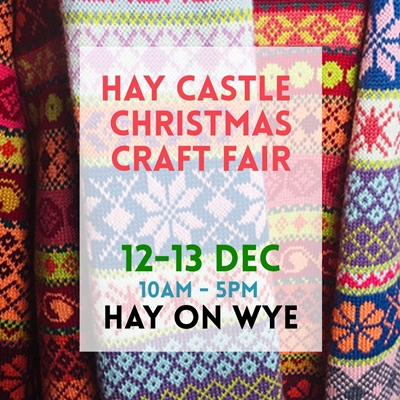
With more than 30 individual makers on show, join us at the Castle for an extravaganza of ideas for Christmas. Treat your friends, family, or yourself from a range of unique and inspiring crafts by local makers from ceramics, jewellery, glass, baskets, food gifts, clothing, photography, painting and much, much more.
Free entry all day.
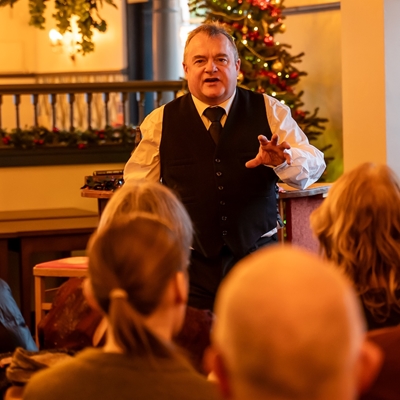
Dylan Thomas and Richard Burton are icons of twentieth century Wales. They have produced stories about Christmases in Wales that rival Charles Dickens’ short stories about Christmas in nineteenth century England. In some ways Thomas and Burton can be accused of inventing Christmas in exactly the same way Dickens is responsible for creating the Christmas that we enjoy so wholeheartedly.
For all of that, however, Burton and Thomas were actors whose love of words shines through these two short but heart-warming stories.
Described by the South Wales Evening Post as ‘a joy’, this ‘Welsh Icons Xmas show’ performed by two actors has proved hugely popular - Join Lighthouse as they conjure up Christmas in the air....

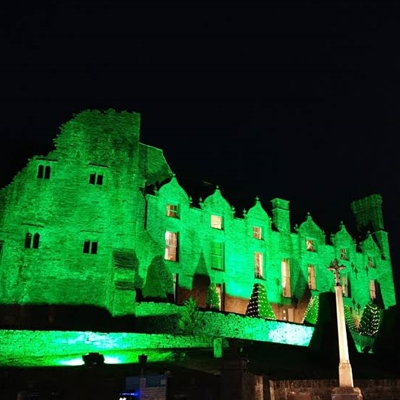
We are excited to offer our first public ticketed paranormal investigation night led by K&M Paranormal who use traditional methods to take groups around the old buildings of the Borders.
The evening begins at 7pm and will run until midnight. People will be split into teams to explore different areas of the building.
Please note that this is not a tour, but an investigation so you will be taking part in the exploration rather than being taken on a guided tour.
Tea/Coffee provided - for dietary and allergy requirements, please bring your own snacks and soft drinks.
Minimum age to attend is 18.
24 tickets available.
The Writing Retreat For Authors-To-Be.
A castle retreat for new writers and book lovers in the famous book town of Hay-on-Wye. Meet authors and booksellers, write, browse the magical bookshops, and enjoy exclusive events.
Suitable for anyone who loves reading and has a writing project they’d like to explore.
You’ll meet expert guests for informal, cosy Q & As. There’ll be optional wellness activities to help you feel inspired and motivated. Team this with stunning countryside, a dreamy riverside location, vibrant local markets and delicious food, it’s the magical experience you’ll want to be part of.
Host: Helen Jane Campbell
Find out more: www.forcreativepeople.com
Price: £400 (excluding accommodation & travel)
Booking terms: £50 deposit, no refunds
Special offer: £375 for Write The Book members & early birds
Location: Hay-on-Wye
Date: Thurs 25 Feb 10.00 to Fri 26 Feb 17:00
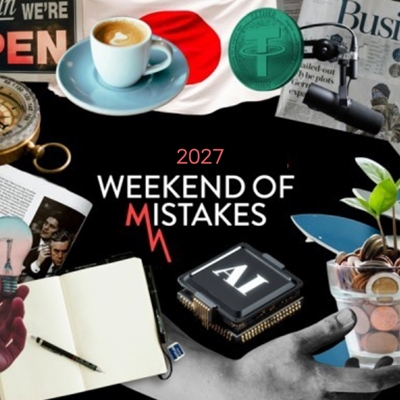
We’re delighted to announce that the Weekend of Mistakes will return for its fourth outing on 19th-21st March 2027.
A local and international audience of professional and individual investors, students and the plain curious and eager-to-learn will return for WoM’s signature mix of sessions on economics and investment and the forces that shape them. Top theme for 2026: Money Beyond Borders – Global Currencies from Croesus to Crypto
Other planned subjects to include: AI – reports from the technology frontier; Where to invest in 2027 – Russell Napier at al.; Women’s Football – a different game; Atomic Fusion -sooner then you think; Merryn’s Investment Breakfast; Global art markets – absorbing the Boomers’ stash.
Join our panels of leading investors, economic and financial historians, entrepreneurs, industry leaders, political commentators and policy-makers - as usual with the lens of history much in evidence in interpreting our confused and volatile present.
Visit our website: the Weekend of Mistakes - and discover why you can’t afford not to be there.
Open 10am to 4pm,
seven days a week.
Hay Castle
Oxford Road
Hay-on-Wye
HR3 5DG
01497 820079
info@haycastletrust.org